Horrific Injustices Faced by Women Throughout History
A reckoning with the violence, injustice, and forgotten suffering endured by women throughout history
History often celebrates kings, wars, and empires. Less often does it remember the women who suffered under systems designed to control, punish, or silence them. These are some of the most disturbing examples of violence and injustice directed at women, many of which occurred far more recently than most people realize.
1. The European Witch Hunts (1450–1750)
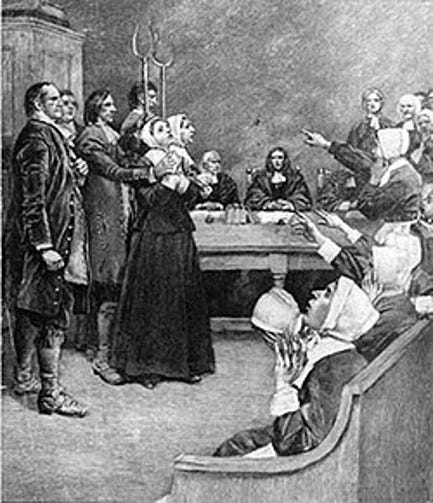
The Salem Witch Trials are famous, but they were only a small part of a much larger tragedy. Across Europe, an estimated 40,000 to 60,000 people were executed for witchcraft, and roughly 75–80% were women.
Many victims were widows, elderly women, healers, or those who lived on the margins of society. Accusations often stemmed from fear, superstition, personal disputes, or religious hysteria. Torture was frequently used to extract confessions before execution.
What makes the witch hunts especially chilling is that they were not acts of lawlessness. They were carried out through courts, governments, and religious institutions.
2. The Magdalene Laundries (Ireland)
 |
Between the 18th century and 1996, thousands of women and girls were confined in Ireland’s Magdalene Laundries, institutions run by Catholic religious orders.
Women could be sent there for being unmarried mothers, victims of abuse, considered “morally suspect,” or simply because their families did not want them. Inside, many performed unpaid labor under harsh conditions and were often isolated from society.
A 2013 Irish government investigation confirmed significant state involvement and led to an official government apology and compensation program for survivors.
3. Forced Sterilization in the United States
 |
Between 1907 and the 1970s, more than 60,000 Americans were forcibly sterilized under eugenics laws.
Those targeted were often poor women, women with disabilities, immigrants, and women from minority communities. In 1927, the U.S. Supreme Court upheld the practice in Buck v. Bell, allowing states to continue sterilizations for decades.
The case remains one of the most disturbing examples of government control over women’s reproductive rights in modern history.
4. The “Comfort Women” of World War II
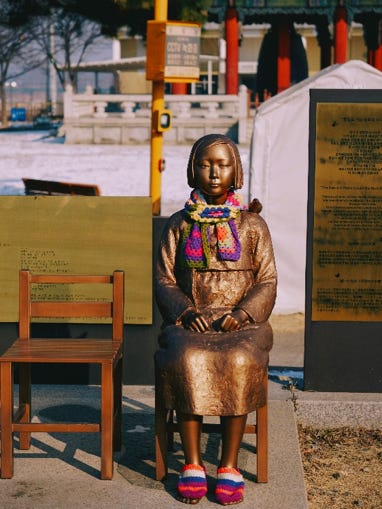 |
During World War II, the Japanese military operated a system in which tens of thousands, and possibly as many as 200,000 women, primarily from Korea, China, and other occupied territories, were forced into sexual slavery.
Many victims were deceived, coerced, or abducted. Survivors often faced lifelong trauma and social stigma after the war.
The issue remains one of the most contentious human rights controversies in East Asia today.
5. Female Genital Mutilation (FGM)
 |
Unlike many entries on this list, this practice is not confined to history.
According to the United Nations, more than 230 million women and girls alive today have undergone Female Genital Mutilation (FGM), a procedure involving the partial or total removal of external female genitalia for non-medical reasons.
FGM can cause severe physical and psychological harm and is internationally recognized as a violation of human rights. Millions of girls remain at risk each year despite global efforts to end the practice.
6. The Montreal Massacre (1989)
 |
On December 6, 1989, a gunman entered Montréal’s École Polytechnique, separated men from women, and deliberately targeted female engineering students.
Fourteen women were murdered in what is widely recognized as an anti-feminist attack. The perpetrator explicitly blamed women and feminism for his problems.
The tragedy led Canada to establish the National Day of Remembrance and Action on Violence Against Women.
Why These Stories Matter
These events occurred in different countries, centuries, and cultures, yet they share a common pattern: institutions and societies failed to protect women when protection mattered most.
Remembering these histories is not about dwelling on the past. It is about recognizing how discrimination, prejudice, and silence can become normalized when left unchallenged.
History is not only a record of what happened. It is a warning about what can happen again.
Sources & Further Reading
European Witch Hunts
The Witch-Hunt in Early Modern Europe by Brian P. Levack
Witches and Neighbours by Robin Briggs
Magdalene Laundries
McAleese Report
Forced Sterilization in the United States
Buck v. Bell
Breeding Contempt by Mark A. Largent
Comfort Women
Comfort Women: Sexual Slavery in the Japanese Military During World War II
United Nations
Female Genital Mutilation (FGM)
Montreal Massacre
Montreal Massacre
Government of Canada: National Day of Remembrance and Action on Violence Against Women
Author’s Note
This article draws on academic research, government reports, and publications from international organizations including the World Health Organization (WHO), the United Nations (UN), and the Government of Ireland. Statistics are estimates based on the best available historical evidence and may vary slightly between sources.


Comments
Post a Comment