Reading List: Women of the Canon
Reading List: Women of the Canon
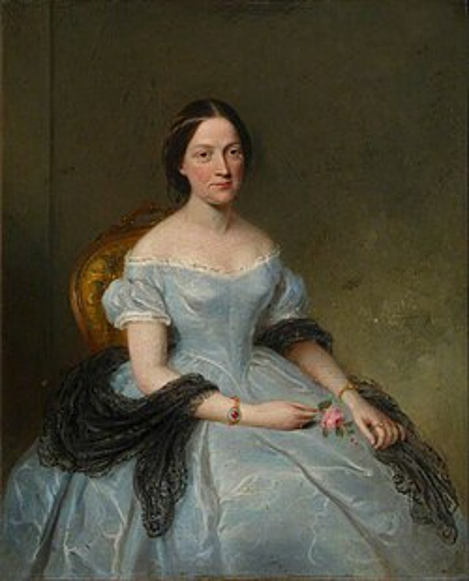 |
| File: Mary Wollstonecraft Shelley (1797–1851) |
Reading List · Literature
Eight classics by women that deserve a permanent spot on your shelf — and in your bones.
There’s a version of literary history that reads like a men’s club with occasional guest passes. You’ll find it on school syllabuses, in “100 Best Novels” lists, in the confident opinions of people who’ve never questioned where those opinions came from. The thing is — the women were always there. Writing longer, stranger, more daring books than the ones getting all the attention. Here are eight of them. No asterisks, no “for women’s literature” caveats. Just books.
1813 · Novel
Pride and Prejudice
Jane Austen
Yes, you’ve heard of it. You may have even read it. But have you read it as the vicious social satire it actually is? Austen published this novel anonymously — “By a Lady” — because that was the polite fiction of the time. What she was doing underneath the drawing-room manners was dissecting an entire class system with the patience of a surgeon and the wit of someone who genuinely couldn’t stand most of the people in the room.
Elizabeth Bennet isn’t a romantic heroine. She’s a woman who refuses to be purchased. That’s the whole book. In 1813, writing that down and getting it published was an act of quiet radicalism.
“I declare after all there is no enjoyment like reading!”
The joke, of course, is that the character who says this is someone who never reads. Austen is always slightly ahead of the room.
Satire | Romance | Class
1818 · Novel · Gothic Fiction
Frankenstein
Mary Shelley
Mary Shelley was nineteen years old when she wrote what would become the first science fiction novel in the English language. Let that sit for a moment. She was also processing the death of her first child, a difficult relationship, and the intellectual aggression of a circle of men who considered themselves geniuses. The monster isn’t a metaphor. The monster is a way of asking: what happens when you create something and refuse to take responsibility for it?
Every AI ethics debate, every conversation about scientific hubris, every story about men who build things and abandon them — it all leads back to this book. Written by a teenager at a villa in Switzerland during a thunderstorm, on a dare.
Science Fiction | Gothic | Philosophy
1847 · Novel
Jane Eyre
Charlotte Brontë
Charlotte Brontë published under the name Currer Bell. Critics who loved it assumed it was written by a man. When the truth came out, some of those same critics decided they liked it less. The novel itself — about a plain, poor woman who insists on being treated as a moral equal — didn’t change. The readers did.
Jane Eyre is often called a romance, which is accurate and also undersells it completely. It’s a book about interiority — about the full, ungovernable life happening inside a woman that the world keeps trying to ignore. The famous line — I am no bird; and no net ensnares me — isn’t a love declaration. It’s a manifesto.
Gothic Romance | Identity | Class
1847 · Novel
Wuthering Heights
Emily Brontë
Emily Brontë published exactly one novel. It was so ferocious and strange that even her sister Charlotte didn’t fully understand it. Early reviewers used words like “brutal” and “coarse.” They weren’t wrong. This is not a love story in any comfortable sense. Heathcliff is not a romantic hero. He is a study in what poverty, rejection, and a particular kind of hunger can do to a person over decades.
Wuthering Heights has one of the most formally daring structures in Victorian fiction — narrators within narrators, timelines folding in on themselves, no reliable voice anywhere. Emily Brontë, who barely left Yorkshire and died at thirty, somehow wrote the kind of novel that writers spend entire careers working toward.
Gothic | Obsession | Yorkshire Moors
1869 · Novel
Middlemarch
George Eliot
George Eliot is actually Mary Ann Evans, who used a male pen name because she understood exactly how the literary world would treat her work if she didn’t. The irony is that Middlemarch — widely considered one of the greatest novels ever written in English — is entirely about the texture of ordinary life, the small acts of mercy and selfishness that shape a community over time.
Virginia Woolf called it “one of the few English novels written for grown-up people.” It begins with a young woman of immense capability living in a world with nowhere to put it. If that doesn’t resonate in 2025, you’re lucky.
The growing good of the world is partly dependent on unhistoric acts.
Realism | Society | Moral Philosophy
1925 · Novel · Modernism
Mrs Dalloway
Virginia Woolf
One day. One woman. One city. The whole thing takes place over the course of a single day in London, and yet by the end you’ve been inside more minds, crossed more distances of feeling, and thought more carefully about time and memory than most novels manage in three hundred pages of plot.
Woolf invented a way of writing — that stream-of-consciousness drift between one person’s thoughts and another’s — that sounds effortless and is devastatingly precise. The novel also has more to say about trauma and its aftermath than most books that are explicitly about trauma. Septimus Warren Smith is not a minor character. He is the other half of Clarissa Dalloway, the life she didn’t live, the cost of everything she chose.
Modernism | Consciousness | London
1937 · Novel · Harlem Renaissance
Their Eyes Were Watching God
Zora Neale Hurston
Hurston wrote this novel in seven weeks while on a folklore research trip in Haiti. It was largely dismissed by her contemporaries — including, stingingly, Richard Wright — and then forgotten for decades, until Alice Walker went looking for her grave in the 1970s and essentially brought both Hurston and this book back from the dead.
The prose is extraordinary. Not just good — extraordinary in a way that stops you mid-sentence and makes you go back. It’s a novel about a Black woman in the American South who wants, simply, to discover what life feels like on her own terms. Janie Crawford’s journey is sensual, funny, devastating, and deeply alive in a way that is rare in any literature from any era.
Ships at a distance have every man’s wish on board.
Harlem Renaissance | Identity | Folklore
1987 · Novel · American Literature
Beloved
Toni Morrison
Toni Morrison won the Nobel Prize. She also had this novel rejected by the Pulitzer board in 1987, prompting forty-eight Black writers and critics to sign an open letter in protest. The following year it won. None of that back-story is necessary for reading the book, but it tells you something about how long the wheels of recognition take to turn, and for whom.
Beloved is about slavery’s aftermath — not in the abstract, but in the body. In the house. In the specific, daily, generational weight of what was done to people and what people were forced to do in response. It is written with such control and such ferocity that reading it feels like witnessing something that cannot be looked away from. It is the most important American novel of the twentieth century. That’s not a controversial claim. It’s a description of what the book actually does.
Historical Fiction | Memory | American South
Every one of these books was written by a woman who was told, in some way — by the market, by the critics, by the pen names they were pressured to adopt, by the reviews they received, by the shelves they were or weren’t placed on — that their perspective was secondary. None of them wrote secondary books.
Start anywhere. The order doesn’t matter. What matters is that you read them as what they are: not “women’s classics,” not a separate, gentler category of literature. Just books. Difficult, brilliant, necessary books, written by people who had every reason not to bother, and bothered anyway.
Follow me on Medium:


Comments
Post a Comment