Jane Austen: The Quiet Revolutionary
Jane Austen:
The Quiet Revolutionary
Literary Biography · Classic Literature
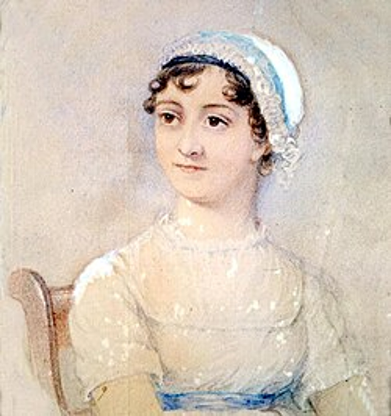 |
Portrait of Jane Austen in watercolor and pencil
|
She wrote six novels in a small parlour, hid her pages from visitors, and published anonymously. Then she changed English literature forever.
June 2026 · 7 min read
Early life | Love & loss | Her works | Critics | Legacy
Early life: 1775–1796
Born into a bookish, brilliant household
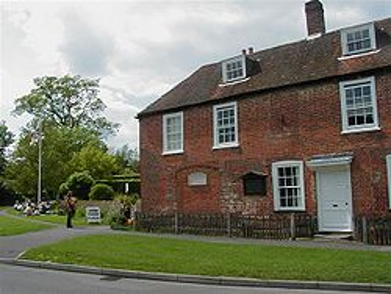 |
| House of Jane Austen, Chawton, Hampshire |
Jane Austen arrived on a cold December night in 1775 — the seventh of eight children — in the Hampshire village of Steventon. Her father, a country rector, kept a substantial library and staged amateur theatricals in the barn. Her mother was sharp-tongued and witty. Jane inherited both.
She began writing as a teenager: comic sketches, parody novels, and savage little satires passed around among delighted siblings. The juvenilia she left behind are extraordinary — irreverent, fully in command of irony, and written by someone who clearly found the adult world deeply, hilariously absurd.
“I think I may boast myself to be, with all possible vanity, the most unlearned and uninformed female who ever dared to be an authoress.”
— Jane Austen, in a letter, 1815
The family was not wealthy, but it was clever — and for Austen, that mattered more. The household treated literature seriously enough that a young girl with a notebook and a mordant sense of humour could become, quietly and without anyone making a fuss about it, a writer.
Love & loss — The life she didn’t get to live
Almost married. Twice. And then not.
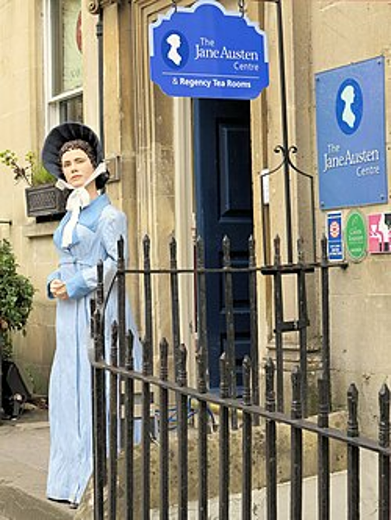 |
| Jane Austen Centre — geograph.org.uk |
In December 1802, a young man named Harris Bigg-Wither — wealthy, well-connected, and by most accounts spectacularly dull — proposed to Austen. She accepted. Then, the following morning, she changed her mind and turned him down. Nobody knows why. Given that her novels are essentially long, brilliant arguments for marrying only for love, one can make an educated guess.
Before that, there was Tom Lefroy — a young Irish law student she met at a ball when she was twenty. Her letters to her sister Cassandra crackle with what looks unmistakably like infatuation. Lefroy later admitted to a “boyish love.” He then went off and married money, became Lord Chief Justice of Ireland, and lived to ninety-three.
“I am almost afraid to tell you how my Irish friend and I behaved. Imagine to yourself everything most profligate and shocking in the way of dancing and sitting down together.”— Jane Austen, letter to Cassandra, 1796
She spent years in Bath — a city she seems to have quietly detested — before settling in Chawton, where she did her best and most sustained work. There, in a small parlour, writing on a tiny table, she would slide her pages under a blotter when visitors entered. The door hinges creaked, and she asked that they not be oiled — they were her early-warning system.
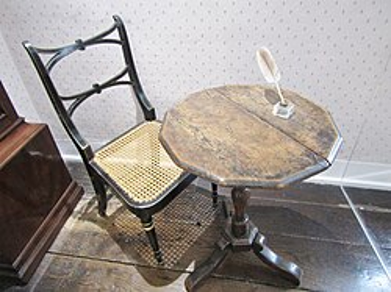 |
| Chawton — Jane Austen |
Throughout her life, her closest relationship remained with her sister Cassandra Austen, who preserved much of her legacy after her death.
Her works — Six novels. Infinite depth.
The narrow world that contained everything
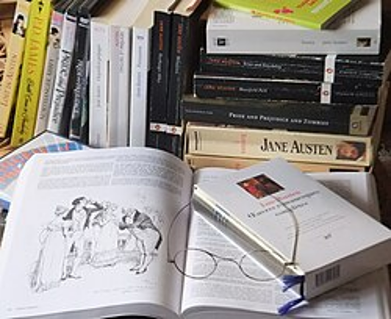 |
On the surface, her six completed novels cover a remarkably narrow territory: the marriage prospects of young women in rural England. This is like saying King Lear is about inheritance disputes. What Austen was actually doing was conducting a rigorous philosophical investigation into how to live — how to read people accurately, how to resist social pressure without becoming a prig, and how to remain honest in a world that rewards flattery.
Pride and Prejudice (1813) remains her most beloved. Elizabeth Bennet and Mr. Darcy sparring their way toward love against a backdrop of economic anxiety and social theatre is one of fiction’s great pleasures. But the argument exists — quietly, persistently — that Persuasion, written when she was already ill, is her finest work. Anne Elliot, nursing a grief she has never spoken aloud, is Austen at her most human and most heartbreaking.
“I must keep to my own style and go on in my own way; and though I may never succeed again in that, I am convinced that I should totally fail in any other.”— Jane Austen
Sense & Sensibility — 1811 · Her first published novel
Pride & Prejudice — 1813 · Elizabeth Bennet & Darcy
Emma — 1815 · Dedicated to a prince she despised
Persuasion — 1817 · Her last novel; published posthumously
She published anonymously — first as “A Lady,” then as “the Author of Pride and Prejudice.” This was partly convention, and partly because the literary world was not hospitable to women with visible ambition. She understood this perfectly, and made no public complaint about it.
Admirers & critics — From royalty to furious rivals
The Prince loved her. Twain wanted to exhume her.
The Prince Regent — later the dissolute George IV — was an ardent admirer. He kept a set of her novels at each of his residences, and his librarian wrote suggesting she might dedicate her next book to him. She found herself unable to refuse, and so Emma was dedicated to a man she privately thought a reprobate. One imagines the smile she swallowed while writing that dedication.
Sir Walter Scott was both generous and honest: he wrote that Austen possessed a talent for describing “the involvements and feelings and characters of ordinary life” that was “the most wonderful I ever met with,” and admitted that the same gift was “denied to me.” Coming from the most celebrated novelist of the age, this was something close to an abdication in her favour.
“Every time I read Pride and Prejudice I want to dig her up and beat her over the skull with her own shin-bone.”— Mark Twain
Mark Twain’s hostility was theatrical and famous. He also declared that any library containing her books was “a good library to keep out of.” Scholars have spent considerable time unpacking whether this was genuine aesthetic revulsion or something more like obsession. The vehemence certainly suggests he thought about her a great deal.
Ralph Waldo Emerson found her “vulgar in tone, sterile in artistic invention, imprisoned in the wretched conventions of English society, without genius, wit, or knowledge of the world.” He wrote this in his journal with the confidence of a man who had read her carefully and was deeply unsettled by what he found.
Sir Walter Scott — Called her talent the finest he had ever encountered
George IV — Her unlikely royal fan; kept her at every residence
Mark Twain — Threatened posthumous violence; was clearly obsessed
R. W. Emerson — Called her vulgar; found ordinary life insufficiently cosmic
Legacy: 1817 — forever
She died at forty-one. Her reputation never stopped growing.
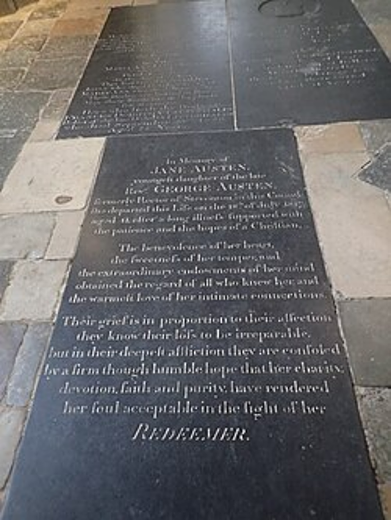 |
| The grave of Jane Austen in Winchester Cathedral |
Austen died in Winchester in July 1817, probably of Addison’s disease, though the diagnosis remains debated. She was forty-one, and only just beginning to be recognized. Her brother Henry arranged for Northanger Abbey and Persuasion to be published posthumously, and quietly revealed — for the first time — that the author everyone had been reading was his sister.
Her reputation grew slowly, then all at once. By the late nineteenth century she was a recognised classic; by the twentieth, she was canonical; by the twenty-first, she had become something close to a cultural institution. Austen societies exist on six continents. Film and television adaptations have kept coming for a hundred years and show no signs of stopping.
“She is too clever to be unread, and too honest to be comfortable.”— commonly attributed to literary critics of the Victorian era
The woman in the parlour
She never left England. She never married. She spent much of her adult life in a small parlour, sliding her pages under a blotter when anyone came through the door. She published six novels anonymously and died before she could know how enduring they would prove to be.
And she changed everything. Not noisily — she had no interest in noise. But the precision of her observation, the rigour of her moral imagination, and the sheer irresistible pleasure of her prose have outlasted almost everything written in the English language. The door hinge creaked. The pages were hidden. The work survived.


Comments
Post a Comment