The Skin Tax: How the Beauty Industry Turned Women’s Faces Into a Never-Ending Debt
The Skin Tax: How the Beauty Industry Turned Women’s Faces Into a Never-Ending Debt
There is a game women are asked to play every single day — and the rules are designed so they can never quite win.
 |
It starts early. A teenage girl notices a pimple and the world notices it with her — a relative’s unsolicited comment, a classmate’s glance, a magazine screaming “10 steps to glass skin!” from a social media feed. The message is quiet but relentless: your skin, as it naturally exists, is a problem to be solved.
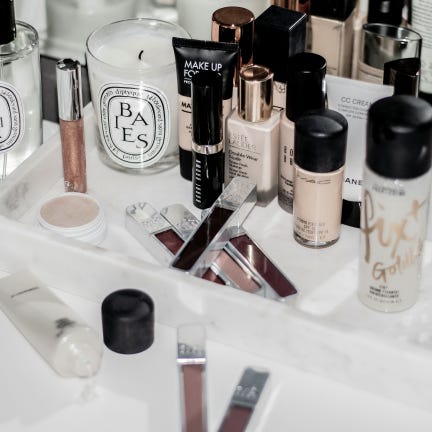
So she starts spending. A cleanser. A toner. A moisturiser. A serum. An SPF. And then — after all that — concealer to hide what the skincare couldn’t fix in time for the world to see her today.
The Myth of the “Natural” Look
 |
Here’s the cruelest trick the beauty industry ever pulled: convincing women that the goal is to look like they’re wearing nothing at all — while selling them fifteen products to get there.
“Natural,” “no-makeup makeup,” “your skin but better.” These phrases move billions of dollars every year. The standard being sold is not actually natural. It is pore-less, line-less, evenly pigmented, dewy-but-not-oily, bright-but-not-shiny skin — something that exists on almost no adult human being without significant intervention. And yet it is framed as a baseline. As the default. As what you should simply have.
When women don’t have it, the framing shifts: you just need the right routine. The right products. More discipline. More money.
This is not wellness. This is a trap with a very good marketing budget.
The Infinite Funnel
 |
Let’s follow the logic, because it is important to name it clearly.
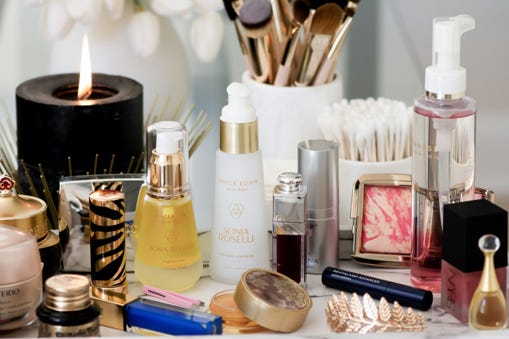
First, women are told their natural skin is insufficient. So they invest in skincare — sometimes thousands of rupees a month on serums, acids, retinols, and masks — all chasing a standard of “bare skin” that has been artificially elevated.
Then, even as they work toward that standard, they are expected to wear makeup right now, because society does not grant women a grace period to fix what it has decided is broken. Sociological studies consistently show a distinct “grooming premium”: women who wear makeup and maintain a conventional beauty standard in professional settings are often perceived as more competent, more trustworthy, and are frequently compensated higher than their under-groomed peers. Conversely, women who don’t are often described as tired, unprofessional, or like they’ve “let themselves go.” The bias is not imagined. It is documented economic reality.
And then, just when a woman has built a routine — found what works, learned the products — the trend cycle spins. Last year’s “clean girl aesthetic” is replaced by a new look. New products. New must-haves. Bold liner is back. No wait, it’s blush. No — it’s glazed skin. The carousel never stops, and stepping off it means falling behind.
This is not accidental. The churn is the product. A woman who is perpetually catching up is a woman who is perpetually buying.
What It Actually Costs
 |
In India’s rapidly growing cosmetics market, the financial toll is steep. While the national average includes mass-market pricing, urban, middle-class women following multi-step global trends can easily spend anywhere between ₹2,000 and ₹10,000 a month on beauty, personal care, and skincare products. Globally, the beauty and personal care industry is a behemoth valued at over $700 billion — built almost entirely on the manufactured insecurity of half the world’s population.
But the cost isn’t only financial.
The Cost of Time: The hours spent watching tutorials, reading ingredient lists, waiting for products to absorb before the next layer. The morning routine that must be completed before you are considered presentable enough to exist in public.
The Cost of Mental Space: The low hum of self-monitoring that never fully switches off — checking if your foundation has oxidised, if your concealer has creased, if your skin is breaking out from a product you introduced last week. Women are not born hyperaware of their faces. They are trained into it.
The Cost of Exclusion: Which invariably falls hardest on those who cannot afford to pay the tax.
The Class Dimension Nobody Wants to Talk About
 |
Skincare and beauty have been aestheticised and aspirationalised to such a degree that poverty now reads as a personal failing of discipline.
A woman with hyperpigmentation who cannot afford the dermatological treatments and premium products marketed at her is not seen as a victim of economic inequality. She is seen as someone who doesn’t take care of herself. A woman who cannot afford to keep up with trends is not seen as a rational person making a financial decision. She is seen as behind. Outdated. Lacking.
The beauty standard doesn’t just exclude — it pathologises exclusion. It turns the inability to spend into a character flaw.
This is especially violent for women of colour, for whom the beauty standard has historically meant something even more corrosive: a pressure not just to be flawless, but to be lighter, straighter, less visibly themselves. The global skin-lightening market, estimated by industry analysts to sit well over $13 billion, thrives because generations of women were told their natural skin tone was a defect. That is not beauty culture. That is colonial harm wearing a pretty label.
The Waste Nobody’s Counting
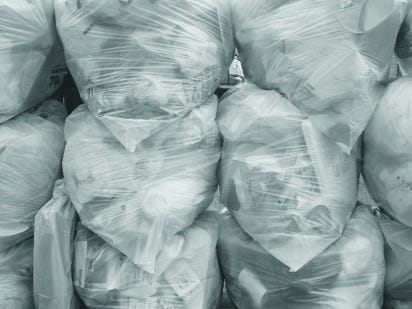
There is a physical cost too — one that extends far beyond the person buying the products.
The beauty industry generates an estimated 120 billion units of packaging every single year. The vast majority of this is rigid, single-use plastic that is fundamentally unrecyclable due to its size, mixed materials (like metal springs in plastic lotion pumps), or dark pigmentation. Foundations in heavy glass bottles with non-separable plastic pumps, serums in complex dropper vials, and individual sheet mask pouches pile up in landfills.
Behind the packaging are the formulations themselves: microplastics used as binders, chemical UV filters (like oxybenzone and octinoxate) that bleach coral reefs, and synthetic fragrances that bioaccumulate in marine life. The planet is paying for a standard of beauty that was invented purely to sell things to women who never asked for the standard in the first place.
While the “clean” and “sustainable” beauty movements claim to offer a solution via refillables and ethically sourced ingredients, they have primarily succeeded in creating a new luxury premium. Eco-conscious products are notoriously expensive, ensuring that the option to pollute less remains a privilege reserved exclusively for those who can afford it.
Why Do We Accept This?
Because it does not present itself as a demand. It presents itself as care.
“You deserve to treat yourself.” “Invest in your skin.” “Self-care is not selfish.” The language of the beauty industry has been so thoroughly colonised by the vocabulary of wellness and liberation that the sales pitch and the feminist pitch now sound identical.
But self-care is not the same as compulsory grooming. Enjoying makeup is not the same as being required to wear it. There is a grand difference between choosing to do something because it brings you genuine joy and doing it because the consequences of not doing it — the sideways looks, the professional penalties, the quiet social exile — are too high to risk.
When a choice comes with that much coercion attached, it is worth asking how free it really is.
What Accountability Might Look Like
None of this is an argument that makeup and skincare are inherently bad, or that women who love these things are complicit in their own oppression. That framing is too simple and it puts the burden, once again, on individual women to make the “right” choices within an unjust system.
The question is not what women should do differently. The question is what we should collectively stop accepting.
We should stop accepting that professional women face a wage and credibility penalty for bare faces. We should stop accepting that young girls are sold insecurity before their brains are fully developed. We should stop accepting that the beauty standard is treated as a neutral given rather than a highly profitable fiction. We should stop accepting that the planet must absorb the physical waste of an industry that manufactures dissatisfaction.
And we should extend genuine compassion to every woman who has stood in front of a drugstore shelf, doing the mental arithmetic between what she needs and what she can afford, and felt ashamed of the gap.
She was never the problem.
The industry that convinced her she was? That is where the conversation belongs.
Because the most radical thing a woman can do, in a world that profits from her believing otherwise, is to look at her face — unfiltered, unretouched, unmade-up — and decide that it was already enough.
Sources and Further Reading
Global Beauty Market Valuation: Data indicating the global beauty and personal care market exceeds $700 billion is tracked by global market research firms including Statista and McKinsey & Company.
Beauty Packaging Waste: The statistic that the beauty industry generates 120 billion units of packaging annually was compiled by the global environmental campaign Zero Waste Week and corroborated by CleanHub’s environmental impact data.
Indian Consumer Spending Trends: Consumer demographics and tiered monthly spending brackets across urban India are tracked via consumer index reports from ProdegeMR and Redseer Strategy Consultants.
Skin-Lightening Market Projections: The valuation of the global skin-lightening and hyperpigmentation product market at over $13 billion is sourced from global industry analyses by Fact.MR and Future Market Insights.
Comments
Post a Comment